Conversation Cafe
Crisis Responses 01
Crisis Responses Cafe
Invite:
Come on down and join us to have a korero about what the most effective, efficient and appropriate approach is to Mental Distress crisis response in Whanganui!
Let’s discuss and explore what we collectively feel it should look like and the best ways to make it work for the people who need it - ALL are welcome!
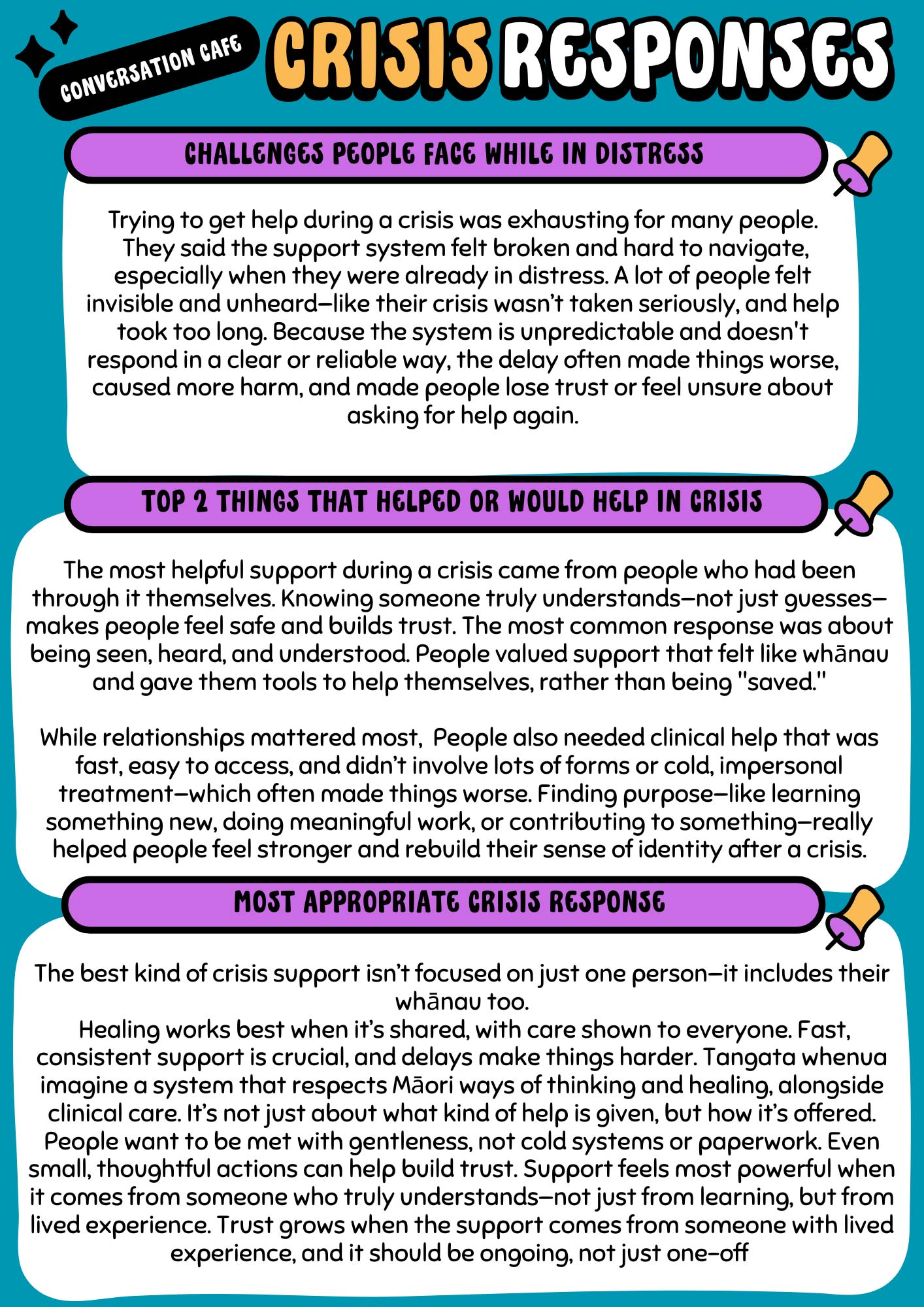
The challenges people face while in distress
Trying to get help during a crisis was exhausting for many people.
They said the support system felt broken and hard to navigate, especially when they were already in distress. A lot of people felt invisible and unheard—like their crisis wasn’t taken seriously, and help took too long. Because the system is unpredictable and doesn't respond in a clear or reliable way, the delay often made things worse, caused more harm, and made people lose trust or feel unsure about asking for help again.
The top 2 things that helped or would help in crisis
The most helpful support during a crisis came from people who had been through it themselves. Knowing someone truly understands—not just guesses—makes people feel safe and builds trust. The most common response was about being seen, heard, and understood. People valued support that felt like whānau and gave them tools to help themselves, rather than being "saved."
While relationships mattered most, People also needed clinical help that was fast, easy to access, and didn’t involve lots of forms or cold, impersonal treatment—which often made things worse. Finding purpose—like learning something new, doing meaningful work, or contributing to something—really helped people feel stronger and rebuild their sense of identity after a crisis.
Most appropriate crisis response
The best kind of crisis support isn’t focused on just one person—it includes their whānau too.
Healing works best when it’s shared, with care shown to everyone. Fast, consistent support is crucial, and delays make things harder. Tangata whenua imagine a system that respects Māori ways of thinking and healing, alongside clinical care. It’s not just about what kind of help is given, but how it’s offered. People want to be met with gentleness, not cold systems or paperwork. Even small, thoughtful actions can help build trust. Support feels most powerful when it comes from someone who truly understands—not just from learning, but from lived experience. Trust grows when the support comes from someone with lived experience, and it should be ongoing, not just one-off
Most appropriate places, spaces and people
Healing works best in places that feel warm, familiar, and respectful of who you are.
- People want spaces that let them make choices and feel dignified—not ones that feel institutional or controlling. Shared, inclusive spaces are preferred.
- The best kind of help comes from real people—those with empathy, lived experience, and the ability to respond with care. Peer supporters were often mentioned as the first and most trusted point of contact. People value good listening, strong boundaries, cultural understanding, and knowing when to speak and when just to be present.
Current intervention and prevention Available + gaps
Whanganui has a wide mix of services, which is a good start — but there are still some problems. The range of support looks promising, but things like limited staffing and lack of coordination can hold it back. People often rely on the same services because they don’t know about other options or can’t access them easily. There’s a strong effort to offer culturally meaningful support, but issues like not enough funding or poor rural access mean it’s not available to everyone who needs it. Even with many services, whaiora still struggle to get help at the right time, especially during or just before a crisis. The system is stretched thin. Because it mostly responds when things go wrong, there’s little chance to help early. It focuses too much on clinical care and misses opportunities to offer support in safer, more relationship-based ways
How current responses align with community need
Many feel that current systems don’t think about whaiora or whānau when designing support. Staff are stretched thin, and a lack of money and resources lowers the quality of care. This leads to burnout and makes it hard to trust the system. Crises don’t stick to office hours. Lots of people mentioned that there’s little or no support available at night when they need it most. Cold, impersonal communication—like automated phone systems—makes things worse, especially when someone’s in distress. The system doesn’t reflect Māori identity, whānau realities, or relational ways of caring. Support based on lived experience, cultural understanding, and connection is badly needed. Many people don’t know who to contact, when, or how. Services don’t always work well together, which adds to confusion and stress. Some first responders don’t have the skills to help safely, which can make things worse instead of better.